NotAKaren, Infrastructure Architecture
AWS Multi-AZ Production Architecture
Cloud & DevOps.
Automating & operating for reliability.
Building and operating secure, resilient cloud infrastructure. Reliability through Infrastructure as Code, CI/CD, and observability.
I provision all my infrastructure as modular, versioned code (Terraform) with remote state backend (GitLab HTTP, S3) and branch-based environment isolation to enable collaborative work without conflict. System configuration is handled through dynamic inventory and templated playbooks (Ansible, aws_ec2, Jinja2) to eliminate any configuration drift between environments and guarantee deployment idempotency. Nothing is configured manually.
I build pipelines that handle the full cycle: linting, IaC security scanning (Checkov), rootless container builds (Buildah) and image scanning (Grype), and automated multi-environment deployment (GitLab CI/CD). I validate pipeline syntax before pushing (Plumber) and use branch-based isolation to spin up ephemeral staging environments on demand.
Goal: deliver verified, scanned, and deployable code without manual intervention.
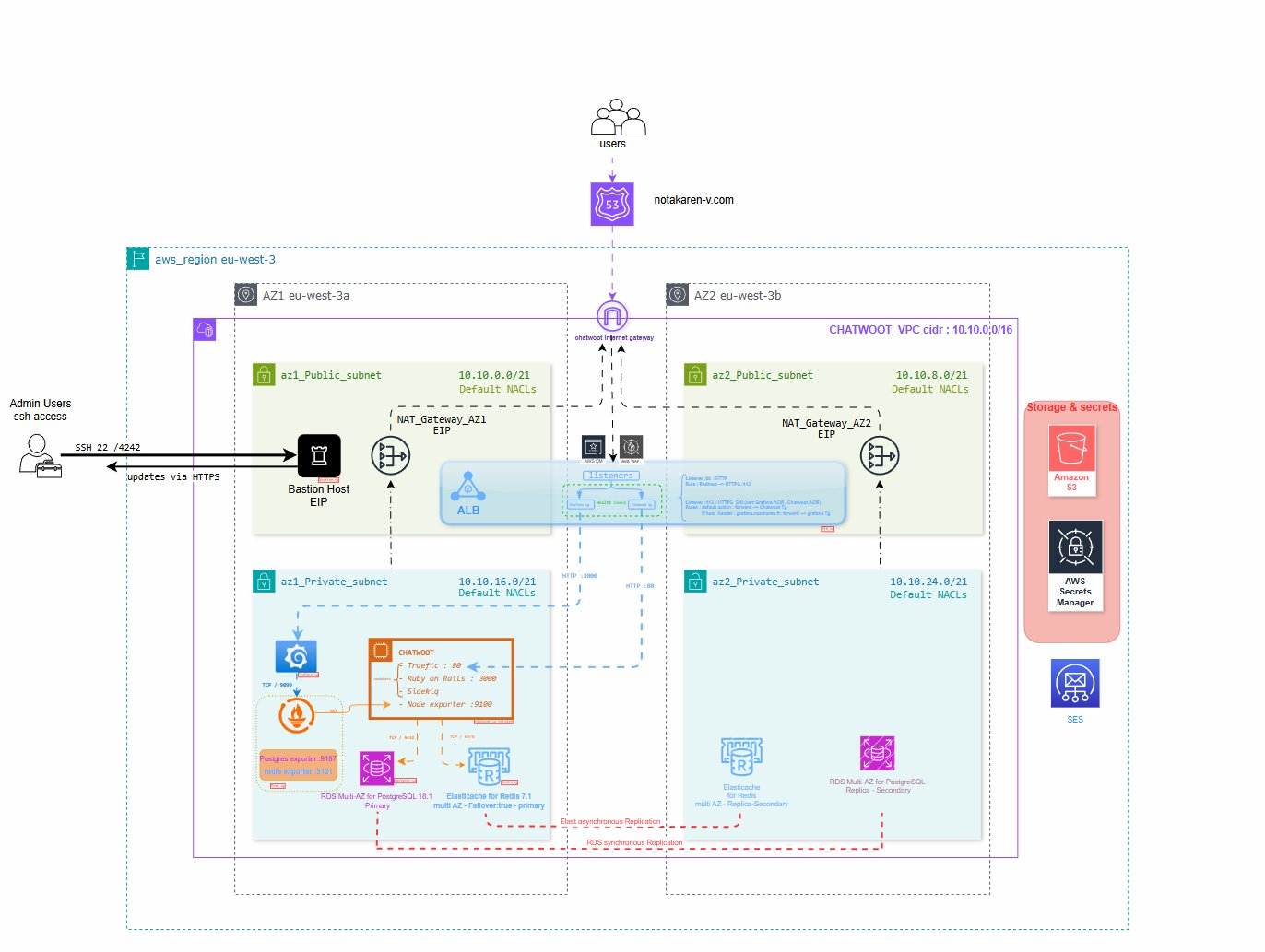
I design multi-AZ architectures with managed services that handle failover automatically (RDS PostgreSQL Multi-AZ, ElastiCache Redis) and auto-scaling compute behind load balancers with health checks (ASG, ALB). Goal: services stay available when individual components go down.
Security at the core of my DevOps work. Every architecture starts with attack surface reduction, least privilege enforcement, and defense in depth, with a web application firewall at the edge (WAFv2), supply chain scanning in the pipeline (Grype, Checkov), SSH hardening, and compliance-aligned practices throughout (OWASP, ANSSI).
I build container images in rootless mode: no daemon, no root privileges, reduced attack surface (Buildah, OCI). Images are scanned before deployment (Grype) and orchestrated for production. I apply this approach to every application I deploy, from customer support platforms to fintech stacks.
I deploy dedicated monitoring with exporters across the stack: compute, database, cache (Prometheus, Grafana, node_exporter, postgres_exporter, redis_exporter). Logs are centralized and queryable (Loki, Promtail). On the cost side, I leverage spot instances when relevant, scheduled infrastructure teardowns, and storage lifecycle policies (S3) to keep cloud spending under control.
Self-hosted Kubernetes platform on bare metal, built one layer at a time as a hands-on SRE exercise. Proxmox hypervisor, a 3-node k3s cluster provisioned from the CLI, Gitea as the internal forge and ArgoCD reconciling the desired state continuously. This one is ongoing, and it has its own page.
End-to-end automated deployment of a Chatwoot customer support platform on AWS. Full Infrastructure as Code approach with Terraform (13 modules), Ansible dynamic inventory, and a GitLab CI/CD pipeline with rootless builds and security scanning. Multi-AZ architecture with high availability, WAF protection, and Prometheus/Grafana monitoring.
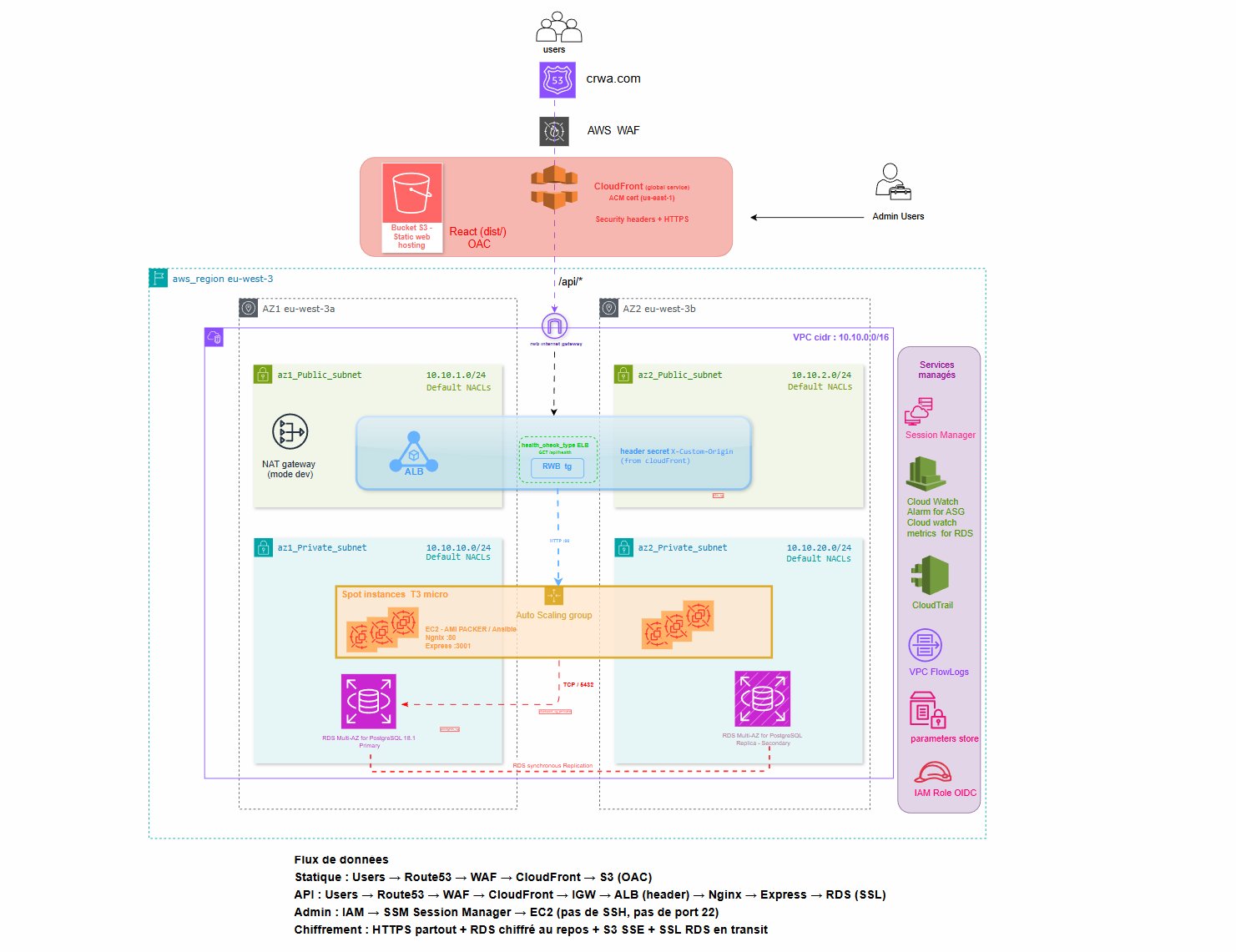
Cloud deployment of a fintech application on AWS as part of the AWS Solutions Architect Associate (SAA-C03) certification preparation. Terraform-provisioned infrastructure with ALB, ASG, RDS PostgreSQL, CloudFront and Nginx reverse proxy. Golden AMIs built with Packer/Ansible for immutable deployments. Cost optimization with spot instances.
Obtained
In preparation
Planned
27 years shaping precision-engineered products, from Ferrari bodywork in Maranello to Venturi concept cars in Monaco. Domains where function dictates form and imprecision doesn't exist.
The terrain changed, the standards didn't. Today I design cloud architectures on AWS, automate infrastructure with Terraform and Ansible, and build CI/CD pipelines that hold up in production. With a conviction that design taught me and security confirms: light is right, less surface, less exposure.
I focus in particular on reliability and observability, keeping systems healthy in production. I am actively deepening my Kubernetes skills toward the KCNA certification, building on the foundations acquired during my training.
"Remarkable progress throughout the training. He improved dramatically on the technical side and is now comfortable with most of the concepts covered during the program. You get the sense that DevOps and the tech world have truly captured him and struck a chord. During the project, he showed strong initiative and autonomy. An excellent, motivated and hardworking student, with a solid grasp of the curriculum. Batch passed."
Joachim · Formateur DevOps, La Capsule